There’s nothing quite like the excitement of a new appliance. You’ve done the research, picked the perfect model, and now it’s sitting proudly in your kitchen. But after plugging it in, you’re hit with a wave of panic when you realize My New Refrigerator Is Not Getting Cold. Take a deep breath. Before you start thinking about returns and warranty claims, let me walk you through why this happens. As a seasoned pro in the world of refrigeration, I can tell you this is one of the most common concerns we hear, and more often than not, the fix is surprisingly simple.
This guide is your first-aid kit. We’ll cover the most common reasons your new fridge is giving you the cold shoulder and provide a step-by-step checklist to get it humming along perfectly.
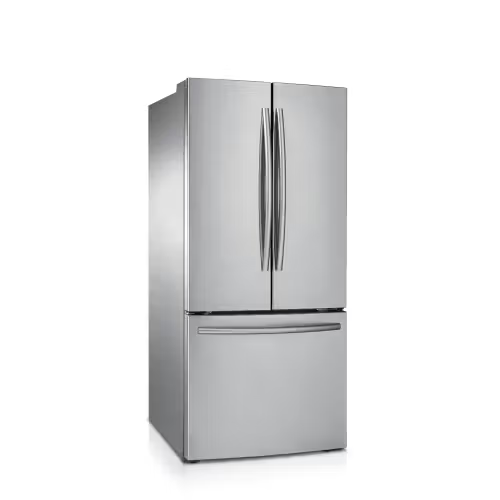
The Most Common Culprit: The 24-Hour Rule
So, why isn’t your fridge an instant icebox? The number one reason a new refrigerator isn’t cold is that it simply hasn’t had enough time. It’s easy to forget, but these machines are performing a minor miracle of thermodynamics, and that process doesn’t happen in a flash.
A brand-new refrigerator, fresh from the warehouse, needs time for its coolant to settle and circulate properly. The compressor, the heart of the cooling system, needs to run for several hours straight to bring the internal temperature down from room temperature to a food-safe 40°F (4°C) or below.
As a general rule, you should wait at least 4 hours before putting food inside, and a full 24 hours for the refrigerator to reach its optimal, stable temperature. Rushing this process by loading it with warm groceries will only make it work harder and take even longer to cool down. Patience is truly a virtue here.
Your DIY Troubleshooting Checklist
If it’s been a full day and you’re still thinking, “Okay, but my new refrigerator is not getting cold enough,” it’s time to run through a quick diagnostic checklist. Let’s start with the basics before we dive into anything more technical.
- Confirm the Power Connection: I know, I know, it sounds almost too simple. But you’d be surprised how often a plug isn’t pushed in all the way or a circuit breaker has been tripped during the delivery shuffle. Double-check that the fridge is securely plugged into a working outlet. You can test the outlet with a small lamp to be sure.
- Check the Thermostat Settings: Most refrigerators are shipped with their temperature controls set to a medium or default setting, which is usually fine. However, sometimes they can be accidentally turned off or set to the warmest setting.
- Recommended Refrigerator Temperature: Aim for 37°F to 40°F (3°C to 4°C).
- Recommended Freezer Temperature: Set it to 0°F (-18°C).
Give the appliance at least a few hours to adjust after you’ve changed the temperature setting.
- Give It Room to Breathe: Refrigerators don’t magically make cold air; they work by removing heat from the inside and releasing it on the outside. This heat exchange happens through the condenser coils, which are typically located on the back or underneath the unit. If your fridge is crammed against a wall or boxed in by cabinets, it can’t dissipate heat effectively.
- Side Clearance: Leave at least 1/2 inch on each side.
- Top Clearance: Ensure at least 1 inch of space on top.
- Rear Clearance: Allow 1 to 2 inches of space behind the refrigerator.
“Proper ventilation is the single most overlooked aspect of refrigerator installation. People focus on the look, but without adequate airflow around the condenser coils, the compressor has to work overtime, leading to poor cooling, higher energy bills, and a shorter lifespan for the appliance.” – David Chen, Senior Appliance Engineer
- Ensure the Doors Are Sealing Tight: A tiny gap in the door seal, or gasket, can let all that precious cold air escape. Run your hand along the edge of the closed door. Do you feel any cool air seeping out? Make sure there’s nothing, like a food package, blocking the door from closing completely. Also, check if the refrigerator is level. If it’s tilted forward, the doors might not swing shut and seal on their own.
- Don’t Overload It All at Once: As we mentioned earlier, avoid the temptation to do a massive grocery run the moment you plug in your new fridge. Loading dozens of room-temperature items at once forces the system to work incredibly hard. Start with a few items and gradually add more as the temperature stabilizes.
What if My New Refrigerator Is Not Getting Cold After 24 Hours?
Okay, so you’ve been patient, you’ve checked all the basics, and your fridge is still warmer than a summer afternoon. Now we can consider a few less common, but still possible, issues.
Is Your Refrigerator Stuck in “Demo” Mode?
“Demo Mode” or “Store Mode” is a setting used on showroom floors. It allows the lights and control panel to work for demonstration purposes, but it completely disables the cooling system to save energy. It’s possible your unit was never taken out of this mode.
- How to fix it: The method for deactivating demo mode varies by brand and model. Your best bet is to consult your user manual. It often involves pressing a combination of two buttons on the control panel simultaneously for a few seconds. A quick search online for “[Your Refrigerator Brand] demo mode off” should also give you the answer.
Could It Be an Issue with the Defrost System?
Modern refrigerators have an automatic defrost system to prevent ice from building up on the evaporator coils (the part that gets cold inside). If this system malfunctions on a brand-new unit, frost can build up rapidly, blocking airflow and preventing the refrigerator from cooling. If you hear the fan running but feel no air coming from the vents inside, this could be the culprit.
When to Call for Professional Help
If you’ve exhausted all these steps and the problem persists, it’s time to stop troubleshooting. A brand-new appliance that fails to cool after 24-48 hours may have a more serious issue, such as:
- A faulty compressor
- A defective condenser or evaporator fan motor
- A refrigerant leak
At this point, your best course of action is to contact the manufacturer or the retailer where you purchased it. Your new refrigerator is under warranty, and they will arrange for a certified technician to diagnose and fix the problem or arrange for a replacement. Do not attempt to fix these complex mechanical issues yourself.
Frequently Asked Questions (FAQ)
Q: How long should a new refrigerator run before I put food in it?
A: It’s best to wait at least 4 to 6 hours before putting any food inside. For the refrigerator to reach its stable, ideal temperature, you should allow up to 24 hours.
Q: Why is my new refrigerator making so much noise?
A: New refrigerators can seem noisy as they settle in. You might hear gurgling or bubbling from the refrigerant, a whirring from the fans, and clicking as the compressor cycles on and off. These sounds are usually normal and should become less noticeable after the first day or two.
Q: What is the ideal temperature for my refrigerator and freezer?
A: For optimal food safety and efficiency, your refrigerator should be set between 37°F and 40°F (3°C and 4°C). The freezer should be set to 0°F (-18°C).
Q: Can I put my new refrigerator in a garage or basement?
A: It depends on the model and your climate. Many standard refrigerators are designed to operate within a specific ambient temperature range (e.g., 60°F to 90°F). If the garage gets too cold in the winter or too hot in the summer, it can affect the fridge’s performance. Look for models specifically rated as “garage-ready.”
Q: I’ve tried everything, and my new refrigerator is not getting cold. What’s the next step?
A: If it has been over 24 hours and you’ve confirmed all the basic settings (power, temperature, clearance), it’s time to use your warranty. Contact the customer service for the brand or the store you bought it from to schedule a service appointment.
Your Cool Conclusion
Finding that my new refrigerator is not getting cold can be incredibly frustrating, but it’s rarely a sign of a complete dud. By following this guide—starting with giving it ample time to stabilize and then working through the simple checklist—you can solve the vast majority of cooling issues on your own. Remember to check for proper power, correct temperature settings, adequate ventilation, and a tight door seal. If the problem persists beyond these simple fixes, don’t hesitate to lean on the manufacturer’s warranty. You invested in a quality appliance, and they are there to ensure it works perfectly.