Let’s be honest, shopping for a new refrigerator can be a bit of a minefield. You’re scrolling through endless options, dazzled by stainless steel finishes and smart features. But before you fall in love with that high-tech French door model, there’s a crucial, non-negotiable step: measuring your space. We’ve all heard the horror stories—the beautiful new fridge that gets delivered only to become a very expensive, oversized paperweight in the garage because it won’t fit through the door. That’s why understanding the Standard Refrigerator Sizes Chart isn’t just helpful; it’s essential for a stress-free purchase. This guide is your new best friend, designed to demystify the numbers and help you find the perfect fit for your kitchen and your life.
Why Refrigerator Size is More Than Just a Number
When we talk about refrigerator size, we’re discussing three key dimensions: width, height, and depth. But it’s also about a fourth, equally important factor: capacity, measured in cubic feet (cu. ft.). This is the internal volume, the actual space you have for your weekly groceries, leftovers, and that secret stash of ice cream.
Getting the size right is a balancing act. Too small, and you’re playing a constant game of food Tetris. Too large, and you’re wasting energy cooling empty space, not to mention overpowering your kitchen’s layout. The perfect refrigerator strikes a balance between fitting your physical space and accommodating your family’s needs.
Decoding the Standard Refrigerator Sizes Chart
So, what are the “standard” sizes? The truth is, “standard” is more of a range than a single set of numbers. It varies significantly based on the style of the refrigerator. Let’s break down the most common types.
| Refrigerator Type | Typical Width (Inches) | Typical Height (Inches) | Typical Depth (Inches) | Typical Capacity (Cu. Ft.) |
|---|---|---|---|---|
| Top-Freezer | 24 – 33 | 60 – 69 | 27 – 34 | 14 – 23 |
| Bottom-Freezer | 24 – 36 | 65 – 72 | 28 – 35 | 18 – 25 |
| Side-by-Side | 33 – 39 | 67 – 72 | 29 – 35 | 20 – 29 |
| French Door | 30 – 36 | 67 – 72 | 29 – 35 | 20 – 30 |
| Counter-Depth | 30 – 36 | 67 – 72 | 24 – 27 (box only) | 18 – 24 |
| Compact/Mini | 17 – 22 | 19 – 34 | 18 – 24 | 1.5 – 6 |
A Closer Look at Fridge Styles
- Top-Freezer: The classic. Generally the most budget-friendly and energy-efficient. Their narrower frames make them great for smaller kitchens or apartments.
- Bottom-Freezer: These models put your most-used items (in the fridge section) at eye level. No more bending down to find that jar of pickles! They offer great capacity and accessibility.
- Side-by-Side: With the freezer on one side and the refrigerator on the other, they offer fantastic organization and are ideal for kitchens where you don’t have enough clearance for a large, single door to swing open.
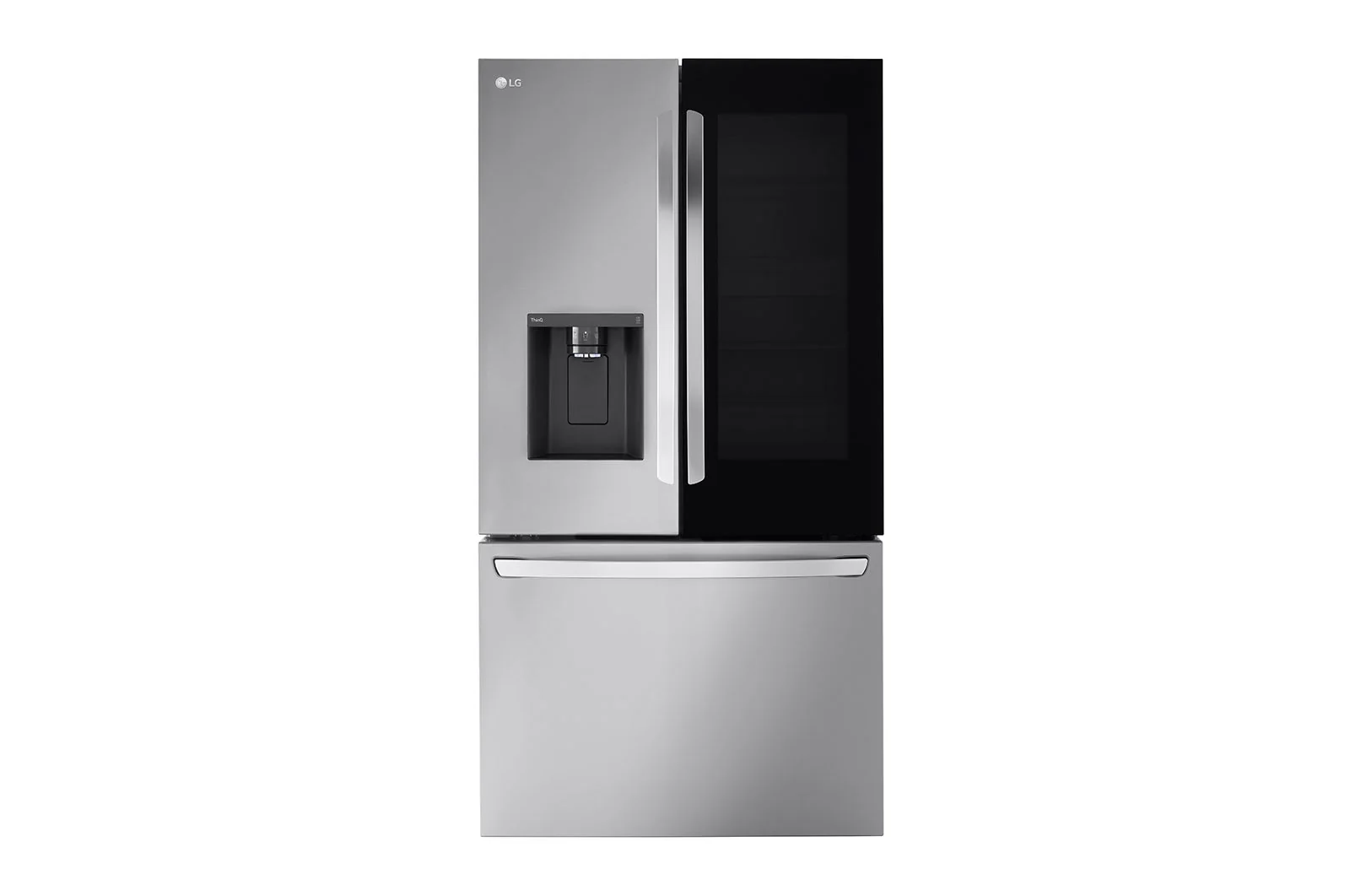
- French Door: The king of modern kitchens. Two doors for the fridge and a bottom freezer drawer combine easy access to fresh food with a spacious freezer. They often come packed with the latest features, which you can read about in our deep dive on French door refrigerators.
- Counter-Depth: These are designed to sit nearly flush with your cabinets, providing a sleek, built-in look without the custom price tag. Just be aware that to achieve this shallower depth, they are often wider and may sacrifice some internal capacity.
How Do I Measure for a New Refrigerator?
This is the most critical step. Grab a tape measure and let’s get it right the first time. Don’t just measure the hole where the old fridge was!
- Measure the Height: Measure from the floor to the bottom of the cabinets above. Do this at the front and back of the space, as floors and cabinets aren’t always perfectly level. Use the smaller of the two measurements.
- Measure the Width: Measure the space from wall to cabinet (or cabinet to cabinet). Again, measure at the top, middle, and bottom of the opening and use the narrowest measurement.
- Measure the Depth: This one is tricky. Measure from the back wall to the front edge of your countertops. Remember, you’ll need space for the door to open fully without hitting an island or wall.
- Crucial Step: Add Breathing Room! This is the step everyone forgets. A refrigerator needs space around it for air to circulate and dissipate heat from the condenser coils. Without it, the compressor works overtime, wasting energy and shortening the fridge’s lifespan.
- Top: Leave at least 1 inch of clearance.
- Sides: Leave at least 1/2 inch on each side.
- Back: Leave at least 1-2 inches of space from the wall.
Expert Take: “I can’t tell you how many service calls are due to improper ventilation,” says David Chen, a senior appliance design engineer. “People cram their beautiful new fridge into a tight space, and within a year, they’re calling me because it’s not cooling properly. That extra inch of space is the cheapest insurance policy you can buy for your refrigerator’s health.”
- Measure the Delivery Path: Measure the width of every doorway, hallway, and tight corner from the street to your kitchen. Your new fridge has to make it there first!
Beyond the Chart: Matching a Fridge to Your Lifestyle
The perfect refrigerator isn’t just about the standard refrigerator sizes chart; it’s about how you live.
How Much Refrigerator Capacity Do I Need?
A good rule of thumb is to allow 4 to 6 cubic feet of fresh food storage per adult in your household, plus a little extra for entertaining or bulk shopping.
- For the Solo Dweller or Couple (1-2 people): 12-18 cu. ft. is usually plenty. A top-freezer or smaller bottom-freezer model is a great fit.
- For the Growing Family (3-4 people): You’ll want to look in the 20-25 cu. ft. range. This is where French door and side-by-side models really start to shine.
- For the Large Family or Entertainer (5+ people): Go big or go home. Look for 25-30+ cu. ft. models to handle bulk grocery runs and party platters with ease.
Essential Features You Can’t Ignore
Once you’ve nailed down the size, you can have fun with the features. Modern refrigerators are technological marvels.
- Energy Efficiency: Look for the Energy Star label. An energy-efficient fridge can save you hundreds of dollars on your electricity bill over its lifetime. Many modern units use an inverter compressor, which runs at variable speeds, making it quieter and much more efficient than old single-speed compressors.
- Ice and Water Dispensers: A must-have for many families. Decide if you want a simple in-door dispenser or one with options for crushed ice and measured filling.
- Smart Features: Today’s smart refrigerators can connect to Wi-Fi, allowing you to adjust temperatures from your phone, get door-ajar alerts, and even see what’s inside while you’re at the grocery store.
- Adjustable Shelving and Storage: Look for spill-proof shelves, humidity-controlled crisper drawers, and flexible door bins. These small details make a huge difference in day-to-day usability.
Frequently Asked Questions (FAQ)
Q: What is a counter-depth refrigerator?
A: A counter-depth refrigerator is designed to be shallower than standard models, typically around 24-27 inches deep for the box itself. This allows it to sit nearly flush with your kitchen cabinets and countertops for a sleek, built-in appearance without the cost of a true built-in unit.
Q: How much space should I leave around my refrigerator for ventilation?
A: You should leave at least 1 inch of clearance at the top, 1/2 inch on both sides, and 1-2 inches at the back. This “breathing room” is critical for the appliance to dissipate heat efficiently, which saves energy and prolongs its life.
Q: Are French door refrigerators better than side-by-side models?
A: It depends on your preference. French door models offer wide, open refrigerator space, making it easy to store large items like platters or pizza boxes. Side-by-side models offer better freezer organization with more shelving and are great for narrower kitchens where a large swinging door isn’t practical.
Q: How do I know if I’m buying an energy-efficient refrigerator?
A: Look for the blue Energy Star certification label. This indicates the model meets or exceeds federal guidelines for energy efficiency. You can also compare the yellow EnergyGuide labels on different models to see their estimated yearly electricity consumption and cost.
Q: Does the color or finish affect the price of a refrigerator?
A: Yes, it often does. Classic white is typically the most affordable option. Finishes like stainless steel, black stainless steel, or custom panel-ready models usually come at a premium price point.
Your Perfect Fit Awaits
Choosing a new refrigerator is a big decision, but it doesn’t have to be overwhelming. By starting with the fundamentals—measuring your space and consulting a standard refrigerator sizes chart—you lay the groundwork for a successful purchase. From there, you can consider your family’s needs, your lifestyle, and the features that will make your life easier. A little planning goes a long way in ensuring your new refrigerator is not just a perfect fit for your kitchen, but a perfect fit for your home.