Let’s be honest, your refrigerator is the silent, hardworking hero of your kitchen. It runs 24/7, 365 days a year, keeping your food fresh and your drinks cold. But that tireless work comes at a cost—a noticeable chunk of your monthly electricity bill. The good news? You don’t have to accept high energy costs as a fact of life. With a few smart adjustments and these expert Power Saving Tips For Refrigerators, you can significantly cut down on energy consumption, save money, and even extend the life of your appliance. Think of it as giving your fridge a little thank-you for all its hard work.
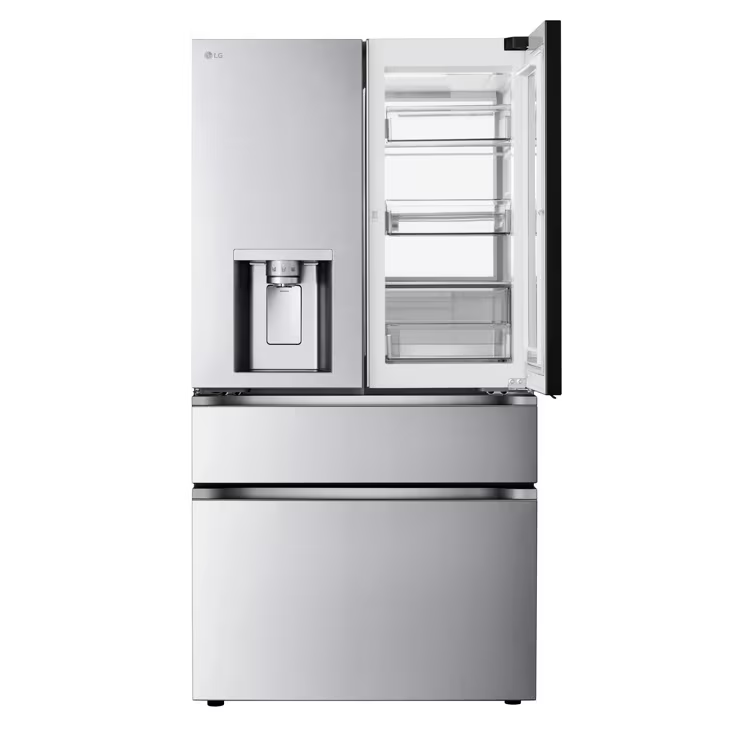
Why Your Refrigerator is an Energy Guzzler (and How to Tame It)
Before we dive into the tips, it helps to understand why your fridge uses so much power. At its core, a refrigerator is a heat pump. It works by moving heat from the inside of the unit to the outside, which is why the back or bottom of your fridge often feels warm. The component doing all this heavy lifting is the compressor. The more that compressor has to run to maintain a cold internal temperature, the more electricity it uses.
Our goal with these energy-saving strategies is simple: make the compressor’s job as easy as possible. Every tip is designed to reduce the amount of time it needs to kick on and run at full tilt.
Everyday Habits: The Easiest Power Saving Tips for Refrigerators
The biggest savings often come from the smallest changes in your daily routine. You don’t need to be a tech wizard to implement these; you just need to be a little mindful.
- Set the ‘Goldilocks’ Temperature: Many people set their fridge temperature colder than necessary. The Food and Drug Administration (FDA) recommends keeping your refrigerator at or below 40°F (4°C) and your freezer at 0°F (-18°C). For optimal energy savings, aim for the sweet spot between 37-40°F. Every degree colder than necessary can increase energy use by several percent.
- Location, Location, Location: Where you place your refrigerator matters. Avoid putting it next to heat sources like an oven, a dishwasher, or in direct, blistering sunlight from a window. The warmer the air around the fridge, the harder it has to work to dissipate heat and stay cool inside.
- Give It Some Breathing Room: Your refrigerator’s condenser coils (usually at the back or bottom) are crucial for releasing heat. If you push the unit flush against the wall or cram things around it, you’re trapping that heat. This forces the compressor to work overtime. As a rule of thumb, leave at least an inch of space on all sides and at the back for proper air circulation.
- Keep It Full (But Not Overstuffed): This one sounds a bit contradictory, right? An empty fridge has to cool down all the new warm air that rushes in every time you open the door. A reasonably full fridge, on the other hand, uses the cold items inside as a “thermal mass” to help maintain the low temperature. However, don’t cram it so full that air can’t circulate. Think of it like a well-organized library, not a stuffed closet.
- Cool Hot Foods First: We’ve all been guilty of putting a warm pot of leftovers straight into the fridge. This is a major energy-waster. Hot food releases steam and heat, forcing the compressor into overdrive to bring the internal temperature back down. Let your leftovers cool on the counter for a bit before storing them away.
- Master the ‘In-and-Out’ Rule: Don’t stand there with the door wide open pondering your snack options. Every second the door is open, cold air escapes and is replaced by warm, moist room air. Know what you want before you open the door, grab it, and close it promptly.
Maintenance That Pays You Back: Deeper Energy Savings
A little bit of upkeep goes a long way. These maintenance tasks are simple, take very little time, and can have a surprisingly large impact on your fridge’s efficiency.
How Often Should You Clean Refrigerator Coils?
You should aim to clean your refrigerator’s condenser coils at least once or twice a year. These coils can get caked with dust, pet hair, and cobwebs, which insulates them and traps heat. A quick vacuum with a brush attachment is all it takes to keep them clean and efficient.
Is Your Door Seal Airtight? Try The Dollar Bill Test
A leaky door gasket is like leaving a window open in winter. Your fridge constantly loses cold air, forcing it to run more often. Here’s how to check it:
- Open the refrigerator door.
- Place a dollar bill (or any piece of paper) halfway across the seal.
- Close the door on it.
- Try to pull the bill out. If you feel a slight drag or resistance, your seal is good. If it slides out with no effort at all, you have a leak.
Test this in several spots around the door. If you find leaks, first try cleaning the gasket with warm, soapy water. If that doesn’t help, it may be time to replace it.
Bảng trống.Does Modern Fridge Technology Actually Save Power?
Absolutely. If you’re using a fridge from the 90s, upgrading could be one of the most effective power saving tips for refrigerators you’ll ever get. Technology has come a long way.
The Inverter Compressor: A Game Changer for Efficiency
Traditional refrigerators use a single-speed compressor that is either on (running at 100%) or off. It’s like driving your car by only flooring the gas or slamming on the brakes. An inverter compressor, on the other hand, works like cruise control. It can adjust its speed, running at a low, steady pace to maintain temperature instead of constantly stopping and starting. This results in significant energy savings, quieter operation, and better temperature stability.
“The single biggest efficiency mistake I see is people holding onto a 20-year-old second fridge in the garage. That old clunker can easily cost them over a hundred dollars a year in extra electricity. Upgrading to a modern, Energy Star certified model often pays for itself in just a few years through savings alone.”
– David Chen, Senior Appliance Engineer
Are Smart Refrigerators More Energy-Efficient?
Sometimes. While a giant touchscreen might seem like an energy hog, many smart features are designed to save power. Features like a “door-in-door” or a see-through panel let you grab frequently used items without opening the main compartment, saving cold air. Others can send alerts to your phone if the door is left ajar or monitor your energy usage in real-time.
Looking for a comprehensive guide to all the latest models? Check out our Ultimate Refrigerator Buying Guide for 2024 to compare features and find the perfect fit.
Frequently Asked Questions (FAQ)
Q: What is the best temperature for a refrigerator to save energy?
A: The most energy-efficient temperature range that is still food-safe is between 37°F and 40°F (about 3°C to 4°C). For the freezer, 0°F (-18°C) is the standard and most efficient setting for long-term food storage.
Q: Does a full freezer really use less energy than an empty one?
A: Yes, it generally does. The frozen items act as a thermal mass, helping to keep the freezer cold. When you open the door, less cold air is exchanged for warm air. However, don’t pack it so tightly that you block the air vents.
Q: How much money can I really save with these power saving tips for refrigerators?
A: The savings vary based on your electricity rates and the age of your appliance. However, combining these tips—especially cleaning coils and ensuring a good door seal—can often reduce your refrigerator’s energy consumption by 10% to 25%.
Q: Do those “power saving” devices you plug your fridge into actually work?
A: For the most part, no. Modern refrigerators already have sophisticated systems to manage their power consumption efficiently. Most third-party plug-in devices make little to no difference and are not recommended by manufacturers.
Q: Is it a good idea to unplug my refrigerator at night to save power?
A: Absolutely not. This is a dangerous idea that will cause the food inside to warm to unsafe temperatures, promoting bacteria growth. The energy required to cool the fridge back down in the morning would likely negate any minimal savings anyway.
Your Wallet and Your Fridge Will Thank You
Implementing these power saving tips for refrigerators isn’t about making drastic sacrifices. It’s about working smarter, not harder. By adopting a few simple habits, performing basic maintenance, and understanding how your appliance works, you can make a real difference in your monthly energy bill. A more efficient fridge is not only better for your budget but also better for the environment and helps your trusty kitchen appliance last for years to come. Start with one or two tips today and watch the savings add up.