Finding the perfect refrigerator online only to have it get stuck in your doorway during delivery is a frustrating and avoidable mistake. This comprehensive refrigerator dimensions guide helps you confidently measure your space and choose a fridge that fits perfectly, preventing delivery issues and ensuring optimal performance. By accounting for clearance, door swing, and the delivery path, you can select an appliance that seamlessly integrates into your kitchen.
Why Refrigerator Dimensions Are More Than Just Numbers
You might think measuring for a new fridge is as simple as jotting down three numbers. But in reality, it’s a bit of a spatial puzzle. The listed dimensions on a product page are just the beginning. You also have to account for the “unseen” dimensions: the space for air to circulate, the arc of the swinging doors, and critically, the path it will take to get from the delivery truck to your kitchen. Getting this wrong can lead to an inefficient appliance, or worse, one that doesn’t fit at all.
How do I know what size refrigerator to buy?
To know what size refrigerator to buy, first measure the height, width, and depth of the cabinet opening. Then, add at least one inch of clearance on the top and back, and about half an inch on the sides for proper ventilation. Finally, consider your family’s needs—a good rule of thumb is 4-6 cubic feet of capacity per adult in your household.
The Standard Refrigerator Sizes: A Quick Overview
Refrigerators come in a variety of styles, and each one has a typical dimensional footprint. Understanding these general categories will help you narrow down your search from the very beginning.
- Top-Freezer Refrigerators: The classic choice. These are often the most space-efficient and budget-friendly. They typically range from 24 to 33 inches in width.
- Bottom-Freezer Refrigerators: These place the fresh food compartment at eye level, which many people find more convenient. They share a similar width profile to top-freezer models, usually 24 to 36 inches wide.
- Side-by-Side Refrigerators: With the freezer on one side and the refrigerator on the other, these models offer great organization. Their narrow doors are a plus for kitchens with island counters. Expect widths from 33 to 39 inches.
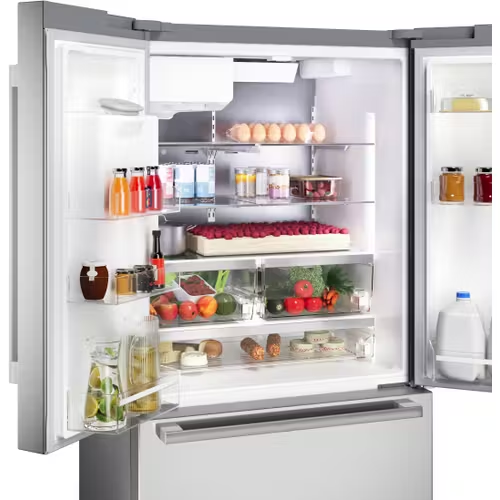
- French Door Refrigerators: The popular modern choice, featuring two doors for the fridge and a freezer drawer below. They offer wide shelf space for things like platters or pizza boxes and typically measure between 30 to 36 inches in width.
- Counter-Depth Refrigerators: These are designed to sit virtually flush with your countertops, offering a sleek, built-in look. While they come in various styles (French Door, Side-by-Side), their defining feature is a shallower depth, usually around 24 to 30 inches (excluding handles). This often means a slightly smaller internal capacity compared to a standard-depth model of the same width.
| Refrigerator Type | Typical Width (Inches) | Typical Height (Inches) | Typical Depth (Inches) | Best For |
|---|---|---|---|---|
| Top-Freezer | 24 – 33 | 60 – 68 | 28 – 34 | Smaller spaces, budgets |
| Bottom-Freezer | 24 – 36 | 65 – 70 | 28 – 34 | Easy fresh food access |
| Side-by-Side | 33 – 39 | 67 – 72 | 30 – 35 | Organization, narrow kitchens |
| French Door | 30 – 36 | 68 – 72 | 29 – 35 | Wide items, modern look |
| Counter-Depth | 30 – 36 | 68 – 72 | 24 – 30 | A seamless, built-in look |
Your Step-by-Step Refrigerator Dimensions Guide
Bảng trống.Ready to get out the tape measure? Let’s walk through the process step-by-step to ensure you cover all your bases.
- Measure the Nook:
- Height: Measure from the floor to the bottom of the upper cabinets. Pro Tip: Take three measurements—left, middle, and right—and use the smallest number. Floors and cabinets are rarely perfectly level.
- Width: Measure the space from wall to wall or cabinet to cabinet. Again, measure at the top, middle, and bottom, and use the smallest figure.
- Depth: Measure from the back wall to the front edge of your countertops. This is especially important if you’re considering a counter-depth model.
- Don’t Forget to Breathe! (The Airflow Gap):
Your refrigerator is a hard-working machine, and it needs “breathing room” to dissipate heat and run efficiently. Skimping on this space can lead to higher energy bills and a shorter lifespan for your appliance.- Leave at least 1 inch of space at the top.
- Leave 1 to 2 inches of space at the back.
- Leave 1/2 inch of space on each side.
- Remember to subtract these clearance measurements from your nook measurements to get your maximum allowable fridge dimensions.
- The Door Swing Dilemma:
This is the step everyone forgets. A refrigerator door needs space to open fully, not just to 90 degrees. If you can’t open the door wide enough, you won’t be able to pull out the crisper drawers or clean the interior properly.- Check if the fridge will be placed next to a wall. If so, you need to account for the door handle and the door’s full swing radius.
- Most manufacturers provide a “depth with door open 90 degrees” measurement. Use this to ensure it won’t bump into an island or an adjacent wall.
- For a French Door or Side-by-Side model, the smaller doors require less swing space, which can be a lifesaver in tighter kitchens.
- The Path of Entry:
Your new refrigerator has to get into the kitchen. This is where many a delivery has gone wrong.- Measure the width of every doorway, hallway, and staircase on the delivery path.
- Don’t forget to account for doorknobs, handrails, or tight corners.
- Sometimes, the doors of the refrigerator can be removed to squeeze through a tight spot, but you should confirm this with the delivery company beforehand.
“I’ve seen it all. People measure the kitchen perfectly but forget about the 28-inch doorway at the end of the hall. Always measure the entire delivery path, from your front door to the final spot. It’ll save you a world of headaches.” – David Chen, Veteran Appliance Installation Specialist
Beyond the Tape Measure: Features That Impact Fit
While the physical box is the main concern, certain features can influence how a refrigerator fits into your life and kitchen layout.
- Ice Makers & Water Dispensers: These features require a water line, which can add a bit to the depth behind the unit and may require professional installation.
- Handles: The listed depth of a refrigerator often excludes the handles, which can add another 2 to 3 inches. This is a critical detail, especially in high-traffic areas where you don’t want a handle sticking out and snagging passersby.
- Smart Features: Modern refrigerators with Wi-Fi connectivity and touch screens don’t typically change the external dimensions, but they do highlight the importance of choosing a central, accessible location in your kitchen.
Frequently Asked Questions (FAQ)
Q: How much space do I need behind my refrigerator?
A: You should leave at least 1 to 2 inches of space behind your refrigerator. This gap is crucial for proper air circulation around the condenser coils, which helps the appliance dissipate heat and run efficiently, saving you money on energy bills.
Q: What is a counter-depth refrigerator?
A: A counter-depth refrigerator is designed to be shallower than a standard-depth model, typically 24-30 inches deep. This allows it to sit nearly flush with the edge of your kitchen cabinets and countertops, creating a sleek, integrated, and custom look.
Q: Can a refrigerator be too big for a kitchen?
A: Yes, absolutely. A refrigerator can be physically too large for the designated space, or it can be proportionally too large, overwhelming the room and disrupting the kitchen’s workflow. It’s important to balance capacity needs with the aesthetic and functional layout of your kitchen.
Q: How do I measure refrigerator capacity in cubic feet?
A: While you don’t need to measure it yourself, you can estimate it by multiplying the interior height, width, and depth in feet. However, it’s best to rely on the manufacturer’s official capacity rating, which accounts for space taken up by shelves and hardware.
Q: What if my new fridge doesn’t fit through the door?
A: If a new refrigerator doesn’t fit, the first step is to see if the appliance doors can be removed by the delivery team. This often reduces the depth enough to get it through. If that fails, you may need to either exchange it for a smaller model or, in rare cases, temporarily remove the doorframe itself.
The Final Measurement: A Smart Decision
Choosing a new refrigerator is a major investment, and it all starts with the tape measure. By following this refrigerator dimensions guide, you’re not just buying an appliance; you’re ensuring a perfect fit, optimal performance, and years of hassle-free use. Remember to measure your space, account for crucial breathing room, map out the delivery path, and consider the door swing. Armed with this knowledge, you can shop with confidence, knowing your perfect new fridge will find its perfect new home.
Frequently Asked Questions
How much space do I need behind my refrigerator?
You should leave at least 1 to 2 inches of space behind your refrigerator. This gap is crucial for proper air circulation around the condenser coils, which helps the appliance dissipate heat and run efficiently, saving you money on energy bills.
What is a counter-depth refrigerator?
A counter-depth refrigerator is designed to be shallower than a standard-depth model, typically 24-30 inches deep. This allows it to sit nearly flush with the edge of your kitchen cabinets and countertops, creating a sleek, integrated, and custom look.
Can a refrigerator be too big for a kitchen?
Yes, absolutely. A refrigerator can be physically too large for the designated space, or it can be proportionally too large, overwhelming the room and disrupting the kitchen's workflow. It's important to balance capacity needs with the aesthetic and functional layout of your kitchen.
How do I measure refrigerator capacity in cubic feet?
While you don't need to measure it yourself, you can estimate it by multiplying the interior height, width, and depth in feet. However, it's best to rely on the manufacturer's official capacity rating, which accounts for space taken up by shelves and hardware.
What if my new fridge doesn't fit through the door?
If a new refrigerator doesn't fit, the first step is to see if the appliance doors can be removed by the delivery team. This often reduces the depth enough to get it through. If that fails, you may need to either exchange it for a smaller model or, in rare cases, temporarily remove the doorframe itself.
Measure Refrigerator Dimensions for a Perfect Fit
Follow these steps to accurately measure your kitchen space and delivery path to ensure your new refrigerator fits without issues.
Measure the height, width, and depth of the cabinet opening where the refrigerator will sit. For height and width, take three measurements (left, middle, right/top, middle, bottom) and use the smallest number to account for uneven surfaces. Measure depth from the back wall to the front edge of your countertops.
Ensure proper ventilation by leaving at least 1 inch of space at the top, 1 to 2 inches at the back, and 1/2 inch on each side of the refrigerator. Subtract these clearance measurements from your nook dimensions to determine the maximum allowable fridge size. This prevents higher energy bills and extends appliance lifespan.
Measure the space required for the refrigerator door to open fully, not just to 90 degrees. Check if the fridge will be next to a wall and account for the door handle and full swing radius. Most manufacturers provide a 'depth with door open 90 degrees' measurement to help prevent bumping into islands or adjacent walls.
Measure the width of every doorway, hallway, and staircase on the delivery path from your front door to the kitchen. Account for doorknobs, handrails, or tight corners. Confirm with the delivery company if the refrigerator doors can be removed to navigate tight spots.
Get our weekly buyer guide
Practical specs, not advice. Unsubscribe anytime.
Really helpful tips, especially about accounting for air circulation. I always just assumed the listed dimensions were all I needed, but the point about needing extra space around the sides and back for proper ventilation makes total sense. It helped me realize I needed a slightly smaller fridge than I originally thought to avoid overheating issues.
Excellent breakdown of why dimensions are more than just numbers. I’ve had delivery nightmares before, so the emphasis on measuring every part of the delivery route, not just the final spot, is crucial. It’s easy to overlook how tight some turns can be, and this guide really highlighted that.
This guide was a lifesaver! I was so focused on the fridge’s width and height that I completely forgot about the delivery path. Our old fridge barely fit through the kitchen door, so knowing to measure all the doorways and hallways beforehand saved us a huge headache. The new counter-depth model looks fantastic and fits perfectly.
Good information overall, but I wish there was a bit more detail on measuring for French door refrigerators specifically. The door swing section was useful, but those double doors can be tricky in a tighter kitchen. Still, it did make me think about the clearance needed for the doors to open fully, which I hadn’t considered.