Ever opened your fridge to find your lettuce has mysteriously frozen solid, or that the milk smells a little… off, a day before its expiration date? You’re not alone. It’s a common kitchen puzzle, and the answer almost always comes down to one simple, crucial factor. So, What Temperature Should A Refrigerator Be? Getting this right is the secret handshake to keeping your food safe, tasting its best, and even saving a little money on your energy bill. Think of your refrigerator not just as a cold box, but as a high-tech food preservation chamber. And you, my friend, are the captain at the helm.
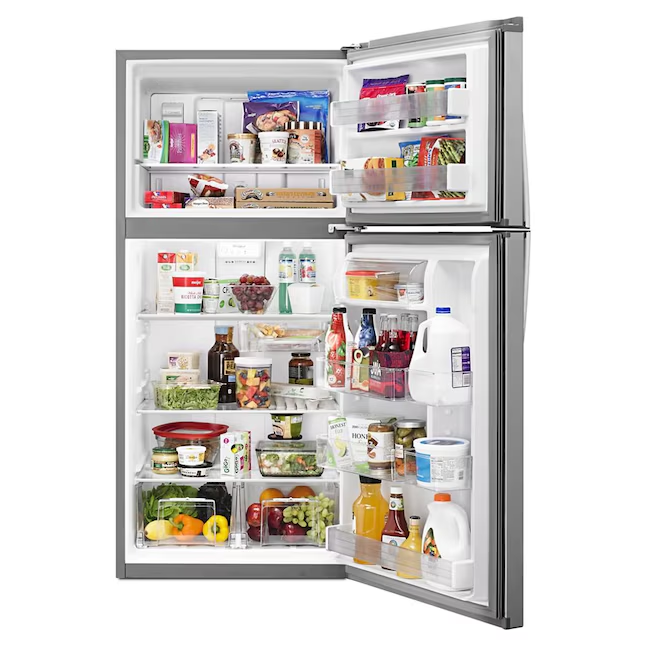
The Magic Numbers: Ideal Refrigerator and Freezer Temperatures
Let’s cut right to the chase. The single most important takeaway you need is the ideal temperature range. Getting this right is non-negotiable for food safety and quality.
The U.S. Food and Drug Administration (FDA) recommends keeping your refrigerator temperature at or below 40°F (4°C). However, for optimal performance and to give yourself a safe buffer, the sweet spot is actually 37°F (3°C). For your freezer, the target is simple and unwavering: 0°F (-18°C). This temperature is cold enough to stop bacterial activity and properly preserve foods for the long haul.
Why This Exact Temperature Range is So Crucial
You might be thinking, “A few degrees here or there can’t make that much of a difference, right?” Oh, but it does. It’s the difference between a crisp salad and a soggy mess, and more importantly, between a safe meal and a potential health risk.
The “Danger Zone” for Food Safety
Food safety experts talk about a temperature range called the “Danger Zone.” This is the range between 40°F (4°C) and 140°F (60°C) where bacteria like Salmonella and E. coli can double in number in as little as 20 minutes. It’s essentially a non-stop bacterial party you don’t want happening in your leftover chicken. Setting your fridge to 37°F ensures it stays well clear of this hazardous threshold, even with slight fluctuations when you open the door.
Preserving Taste and Texture
Temperature isn’t just about safety; it’s about quality. When your fridge is too warm, foods spoil faster. When it’s too cold, you get ice crystals forming where they shouldn’t. This can ruin the delicate cell structure of produce, leading to wilted greens and mealy tomatoes. And nobody wants to find their milk has turned into a slushie. The right temperature maintains the integrity of your food, keeping it fresh and delicious for longer.
Energy Efficiency and Your Wallet
Here’s a little secret from the inside: every degree colder you set your fridge below the optimal temperature can increase its energy consumption by a noticeable percentage. Cranking the dial down to the absolute coldest setting “just to be safe” is like flooring the gas pedal in your car 24/7. It’s unnecessary and wastes money. Sticking to the recommended what temperature should a refrigerator be guidelines keeps your food safe and your electricity bill in check.
Bảng trống.How to Check and Adjust Your Refrigerator Temperature
Now for the hands-on part. You can’t just trust the little 1-to-5 dial inside your fridge. That’s a thermostat setting, not an actual temperature gauge. To get a true reading, you need to do a little science experiment.
Don’t Trust the Dial Blindly
The numbers on your fridge’s dial (often 1 through 5 or 1 through 9) represent power levels, not degrees. ‘5’ is typically the coldest, and ‘1’ is the warmest. But what temperature does ‘3’ actually correspond to? It varies by model, how full the fridge is, and even the ambient temperature of your kitchen.
The Right Way to Measure: A Step-by-Step Guide
- Get an Appliance Thermometer: These are inexpensive and readily available. It’s the most important tool in your food safety arsenal.
- The Glass of Water Test: Place the thermometer in a glass of water. Water temperature is more stable and gives a better reading of the overall internal climate than just measuring the air.
- Place it in the Middle: Put the glass on the middle shelf of your refrigerator.
- Wait 24 Hours: Don’t rush it! Let the fridge cycle normally for a full day to get an accurate, stable reading.
- Check the Reading: Open the door and check the thermometer. Is it at or below 40°F, ideally around 37°F? If so, you’re golden.
For the freezer, simply place the thermometer between some frozen items and check it after 24 hours. You’re looking for that solid 0°F.
Making Adjustments
If your temperature is off, adjust the dial by only one number at a time. Then, wait another 24 hours before measuring again. Making small, patient adjustments is key to dialing in the perfect temperature without accidentally freezing your groceries.
Expert Take: “I’ve seen so many service calls that could have been avoided,” says David Chen, a certified appliance repair technician with over 20 years of experience. “People either over-pack their fridge, blocking air vents, or they set the temperature way too low, causing the compressor to overwork. The most common issue is a simple one: they’ve never actually measured the internal temperature. A $5 thermometer can save you a $150 service call.”
Where to Store Your Food for Optimal Freshness
Your refrigerator isn’t uniformly cold. It has its own microclimates. Knowing the temperature map of your fridge is the final step to becoming a food storage master.
- Doors: This is the warmest part of the fridge due to constant opening. It’s perfect for less-perishable items like condiments, sauces, and butter. Don’t store milk or eggs here!
- Upper Shelves: The temperature here is the most consistent. This is a great spot for leftovers, drinks, yogurt, and ready-to-eat foods.
- Lower Shelves: This is typically the coldest part of the refrigerator. It’s the ideal place for raw meat, poultry, and fish. Storing them here also prevents their juices from dripping onto other foods. Dairy products like milk and cheese also thrive here.
- Crisper Drawers: These are designed to maintain a different humidity level. Use one drawer for fruits (which produce ethylene gas) and the other for vegetables (which are sensitive to it) to prevent premature ripening and spoilage.
Frequently Asked Questions (FAQ)
Q: What setting should my refrigerator be on, 1-5?
A: Typically, a middle setting like 3 is a good starting point. However, this is just a power level, not a specific temperature. You must use an appliance thermometer to verify the internal temperature is at or below 40°F (4°C).
Q: Does an empty refrigerator stay colder?
A: A full (but not over-packed) refrigerator actually maintains its cold temperature more efficiently than an empty one. The cold items inside help absorb warmth when the door is opened, reducing the work your compressor has to do.
Q: How often should I check my refrigerator’s temperature?
A: It’s a good practice to check it once a week to ensure everything is running correctly. This is especially important during seasonal changes, like the start of a hot summer, which can affect your appliance’s performance.
Q: My fridge feels cold, but food is still spoiling quickly. Why?
A: This could be a sign that the temperature is hovering just above 40°F in the “Danger Zone.” It might also be due to a leaky door seal, which lets warm air in, or blocked air vents preventing proper circulation.
Q: Can I put hot food directly into the refrigerator?
A: It’s best to let hot foods cool down on the counter for a bit before refrigerating them. Placing a large, hot dish directly inside can raise the internal temperature of the refrigerator, potentially putting other foods at risk.
Your Refrigerator, Your Rules
Mastering your refrigerator’s climate is one of the easiest and most impactful things you can do in your kitchen. It’s not just about a random number on a dial; it’s about taking control of your food’s safety, longevity, and flavor. By understanding the simple question of what temperature should a refrigerator be, you empower yourself to reduce food waste, protect your family’s health, and get the absolute most out of every grocery run. Now, go forth and be the master of your cold domain.